NFL Passing Yards Props: A UK Punter’s Guide to QB Volume Markets
 Available in US
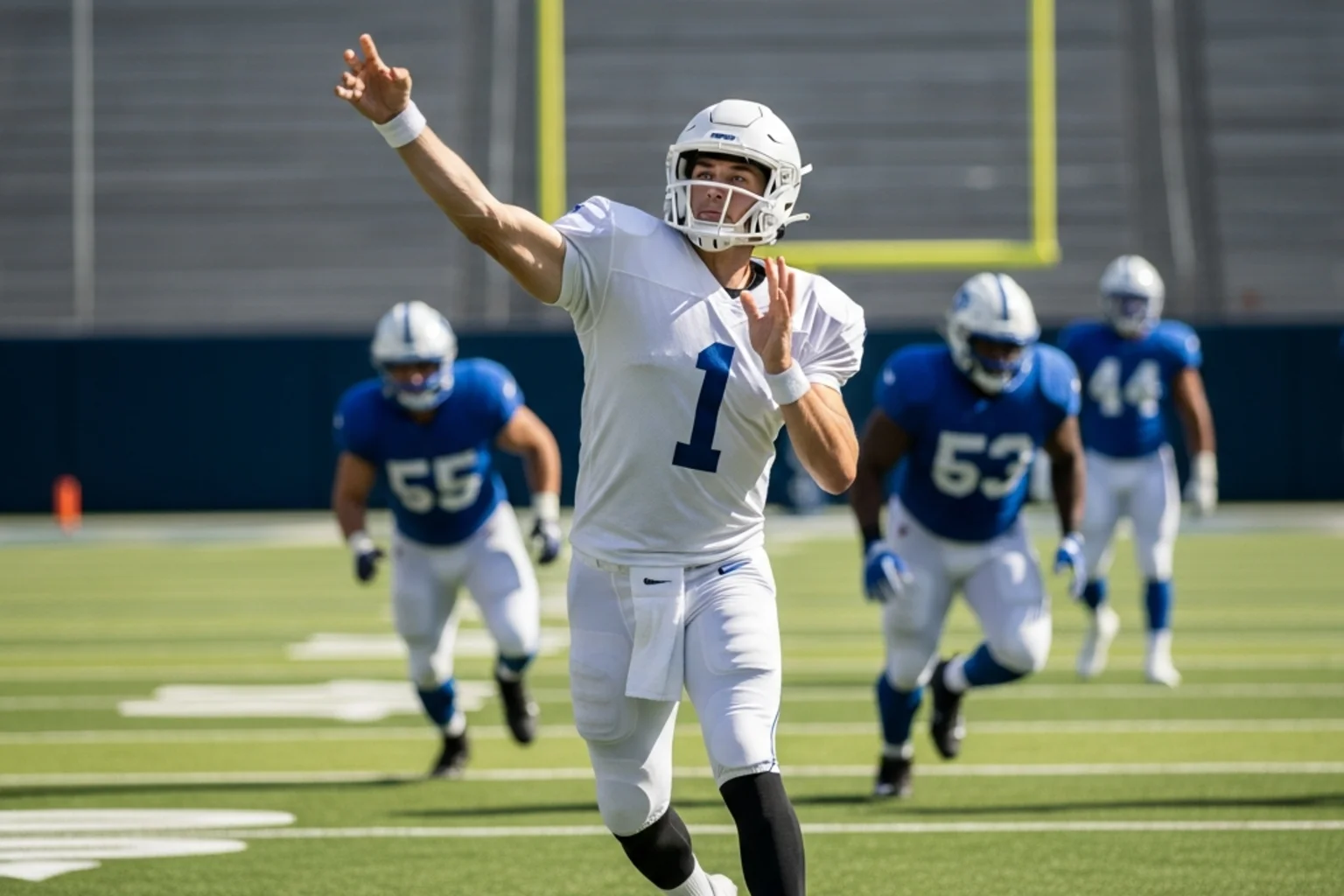
Why passing yards is the QB market UK punters meet first
The very first NFL prop I ever lost money on was a passing yards over on a Sunday night game in 2016. I backed a quarterback to throw for over 275.5 yards because he had averaged 290 across his previous four starts. He finished with 198. The game was a blowout by halftime, his team led by four touchdowns, and the coaching staff ran the ball for the entire second half. That loss taught me more about passing yards props than any guide ever could — the number on the screen is not a prediction of what the quarterback can do, it is a prediction of what the game will ask him to do.
Passing yards is the most liquid quarterback prop at UK sportsbooks. Every major UKGC-licensed platform offers it for every game on the slate, and the lines are posted earlier in the week than most other player markets. For a UK punter stepping into NFL props, this is almost always the first market they encounter. It looks straightforward — over or under a yardage number — but the variables that drive it are layered enough that the books make consistent money from people who treat it like a simple stat bet.
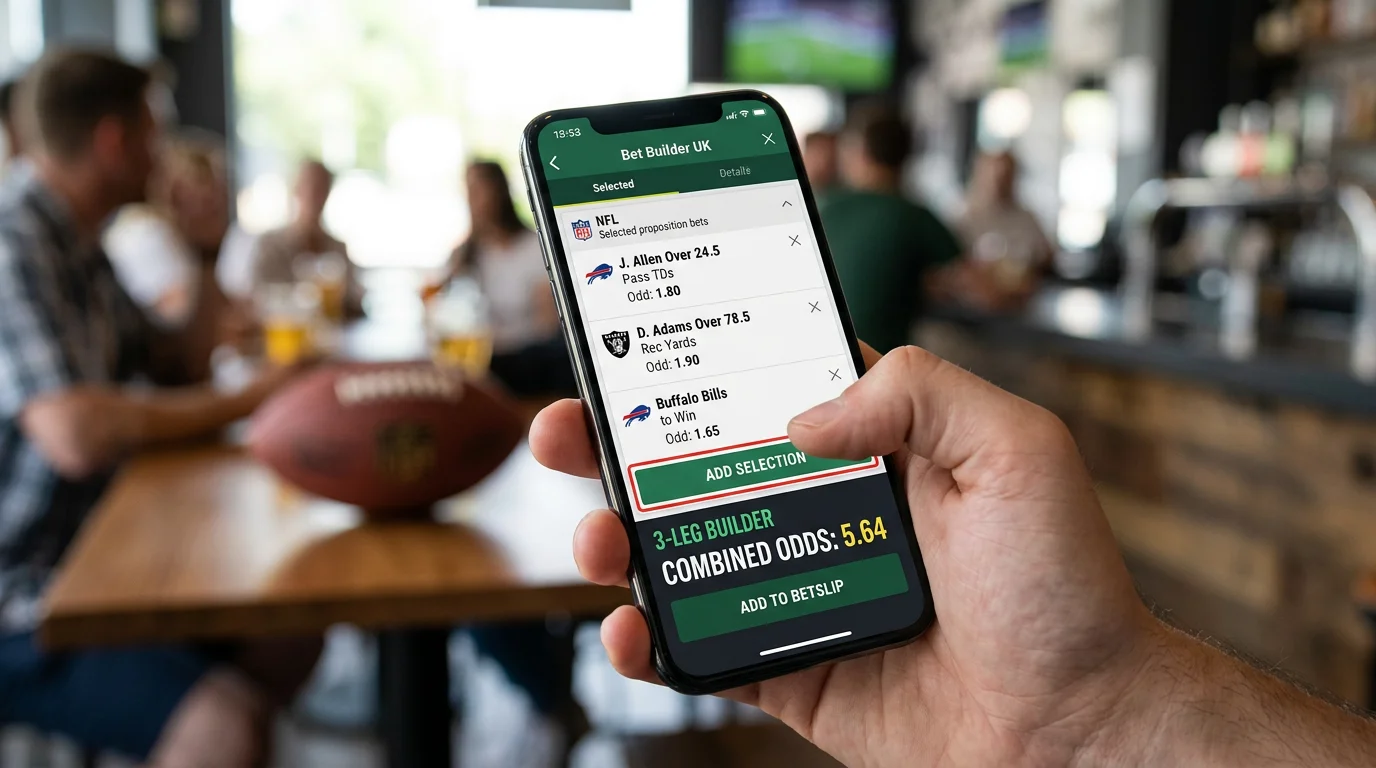
Jeff Feazel of BetMGM noted that same-game parlays have continued to skyrocket in NFL betting, and passing yards props sit at the core of most of those builds. When a punter constructs an SGP, the quarterback’s yardage line is typically the anchor leg, which means even punters who never bet passing yards as a standalone are exposed to its pricing through multi-leg bets.
Find the best options for prop bets for nfl.
How books set a passing yards line
A number like 261.5 does not appear from thin air. I spent a season reverse-engineering how the line forms by tracking opening numbers against the inputs I could observe, and the process follows a consistent logic.
The starting point is the game total and the spread. A game with a total of 50 and a spread of -3 implies the favoured team will score around 26.5 points. The model then estimates what proportion of those points will come from passing versus rushing, based on the team’s offensive tendencies. A pass-heavy offence that runs 62% pass plays on early downs will allocate more of its scoring projection through the air, which pushes the quarterback’s yardage line higher. A balanced or run-first team compresses it.
Next comes the defensive adjustment. The opponent’s pass defence efficiency, measured in yards allowed per attempt and adjusted for strength of schedule, shifts the line. A quarterback facing a secondary that surrenders 7.8 yards per attempt will carry a higher line than the same quarterback facing a unit allowing 5.9. This adjustment is not always dramatic — perhaps 10 to 20 yards — but it moves the implied probability enough to matter at the margins.
The third layer is pace. Teams that run more plays per game create more passing attempts by default. A quarterback on a team that averages 68 offensive plays per game has more raw opportunity than one on a team averaging 58. UK books factor pace into their models, though the weight varies. Some lean heavily on pace; others treat it as secondary to per-attempt efficiency.
The final input is recency — how the quarterback has performed over his last three to five starts. Books know that public money follows recent form, so they shade the line toward what casual bettors expect rather than what the full-season data suggests. A quarterback who threw for 340 yards last week might open 5 to 10 yards higher than his season average warrants, because the book anticipates over-money on his line.
Pace, pass rate and game script
Here is where most UK punters go wrong: they look at a quarterback’s season average and compare it to the line. If the average is above the line, they bet the over. That approach ignores the single most important driver of passing volume — game script.
Game script is the flow of the contest itself. A team that falls behind early will abandon its run game and throw more frequently to claw back the deficit. A team that leads early will run the ball to burn clock, reducing its quarterback’s pass attempts. This is not subtle — the difference between a quarterback trailing by 14 at halftime and one leading by 14 can be 15 to 20 additional pass attempts in the second half. Those extra attempts translate directly into yardage.
The spread gives you a proxy for expected game script. A quarterback on a team that is a seven-point underdog is more likely to be chasing the game, which inflates his passing volume. A quarterback on a 10-point favourite is likely to see his second-half work reduced. I have found that the most consistently profitable passing yards bets are overs on underdogs in games with high totals — the combination of expected volume and expected trailing position aligns both pace and game script in favour of more passing.
Conversely, the most consistently losing passing yards bets in my records are overs on heavy favourites. The quarterback might be perfectly capable of throwing for 300 yards, but the game never asks him to because his defence and running game handle the work. The ability is there; the opportunity is not.
Weather, defensive style and yardage caps
Wind is the silent killer of passing yards props. Rain affects grip and footing, but wind directly reduces the distance and accuracy of throws. I track surface wind speed at kick-off for every outdoor game, and my threshold is 15 miles per hour sustained. Above that number, passing efficiency drops measurably — quarterbacks shorten their throws, offensive coordinators shift to a heavier run mix, and the raw yardage total compresses.
Temperature matters less than people think, with one exception: extreme cold below minus 5 Celsius. In those conditions, receivers struggle with hand flexibility, the ball becomes harder and less grippy, and even elite quarterbacks see their completion rates dip. Most UK punters never check weather because the games are happening thousands of miles away, but a two-minute look at a forecast before placing a passing yards bet is one of the simplest filters available.
Defensive style creates a different kind of cap. Some defences surrender high yardage but low scoring — they bend but do not break, forcing long drives and settling for field goal attempts. A quarterback facing this style might clear his yardage line comfortably but never produce the touchdowns you expected. Other defences play aggressive coverage that limits yardage per attempt but gives up explosive plays. The yardage outcome against these units is more volatile, which makes the over/under harder to project.
Altitude deserves a mention. Games played in Denver carry a measurable advantage for passing volume because the thinner air allows the ball to travel farther with less resistance. The effect is modest — perhaps 8 to 12 additional passing yards on average — but it is real and it is not always priced into the line at UK books, which sometimes lag behind the American market on venue-specific adjustments.
Live adjustments to passing yards props
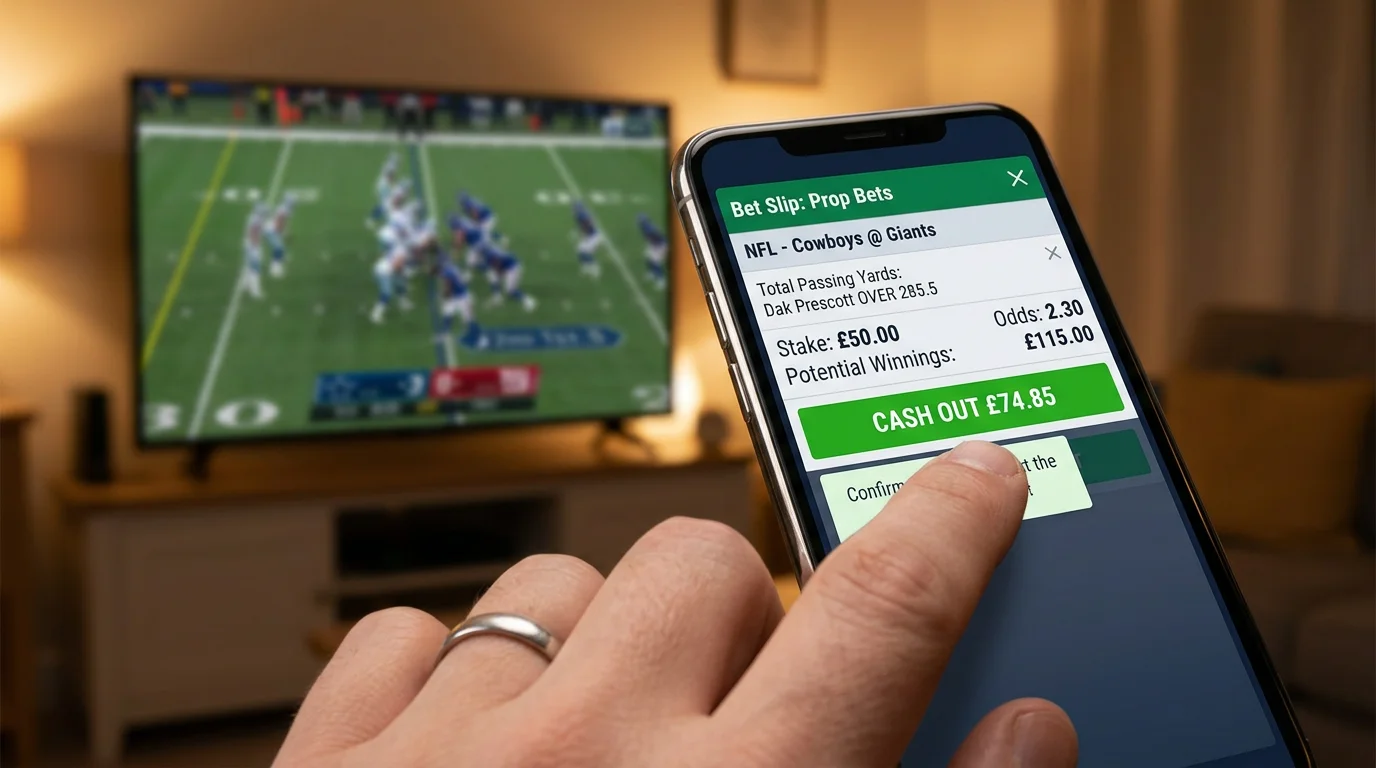
A passing yards prop does not stop being interesting once the game kicks off. Live markets on quarterback yardage are available at most UK sportsbooks, and the pricing dynamics shift substantially from pre-game.
The most common live scenario I exploit is the first-half blowout. When one team leads by 17 or more at halftime, the trailing quarterback’s live passing yards over/under drops sharply — the model assumes the game is decided and the losing team will empty the bench. But that assumption is wrong more often than you would expect. NFL coaches are stubborn about competitive pride, and quarterbacks frequently stay in the game through the third quarter even in lopsided contests. The result is a deflated live line that does not reflect the actual volume the quarterback will still see.
Read our detailed review of NFL Player Prop Bets in the UK: A Position-by-Position Breakdown.
The opposite scenario — a game that is unexpectedly close at halftime when one team was a heavy favourite — creates opportunities on the favoured quarterback’s live over. The pre-game model assumed he would cruise and the run game would take over. Instead, the game is tight, and now he needs to keep throwing into the fourth quarter. The live line has not fully adjusted because the model still assigns some probability to the favourite pulling away and reverting to the run.
One discipline I enforce on myself with live passing yards bets: I never bet a live line within 30 yards of the pre-game number in either direction. If the live over/under has barely moved from the pre-game, the market has not given me any new information. The edge in live props comes from overreaction or underreaction to the game state, and a number that has not moved is telling you nothing has changed enough to exploit.
For a deeper look at how live prop markets function across all categories, the rushing yards props guide covers some parallel mechanics from the ground-game side that apply equally to how live passing lines behave.
Do passing yards props include sack yardage?
No. In NFL statistics, sack yardage is subtracted from a team’s total passing yards but is not deducted from the quarterback’s individual passing yards stat. UK sportsbooks settle passing yards props on the official NFL box score, which credits the quarterback with his gross passing yards regardless of sacks taken.
What happens to a passing yards prop if the QB is injured in Q1?
Settlement rules vary by bookmaker. Most UK-licensed sportsbooks require the quarterback to attempt a minimum number of passes — commonly one — for the bet to stand. If the QB is injured before attempting a pass, the bet is typically voided. If he throws even a single pass before leaving, the bet stands and settles on his final stat line. Always check the specific rules at your sportsbook before placing.
How wide are passing yards lines typically at UK books?
For a typical NFL Sunday game, the passing yards line for a starting quarterback usually falls between 215.5 and 295.5 at UK sportsbooks. Elite quarterbacks in high-total games can see lines above 300. Backup quarterbacks and those in run-heavy offences may sit as low as 185.5. The range reflects the enormous variance in NFL passing volume from week to week.
Prepared by the Prop Bets for nfl editorial staff.