NFL London Games and Prop Betting: How UK Fixtures Reshape the Markets
 Available in US

Why London games carry different prop characteristics
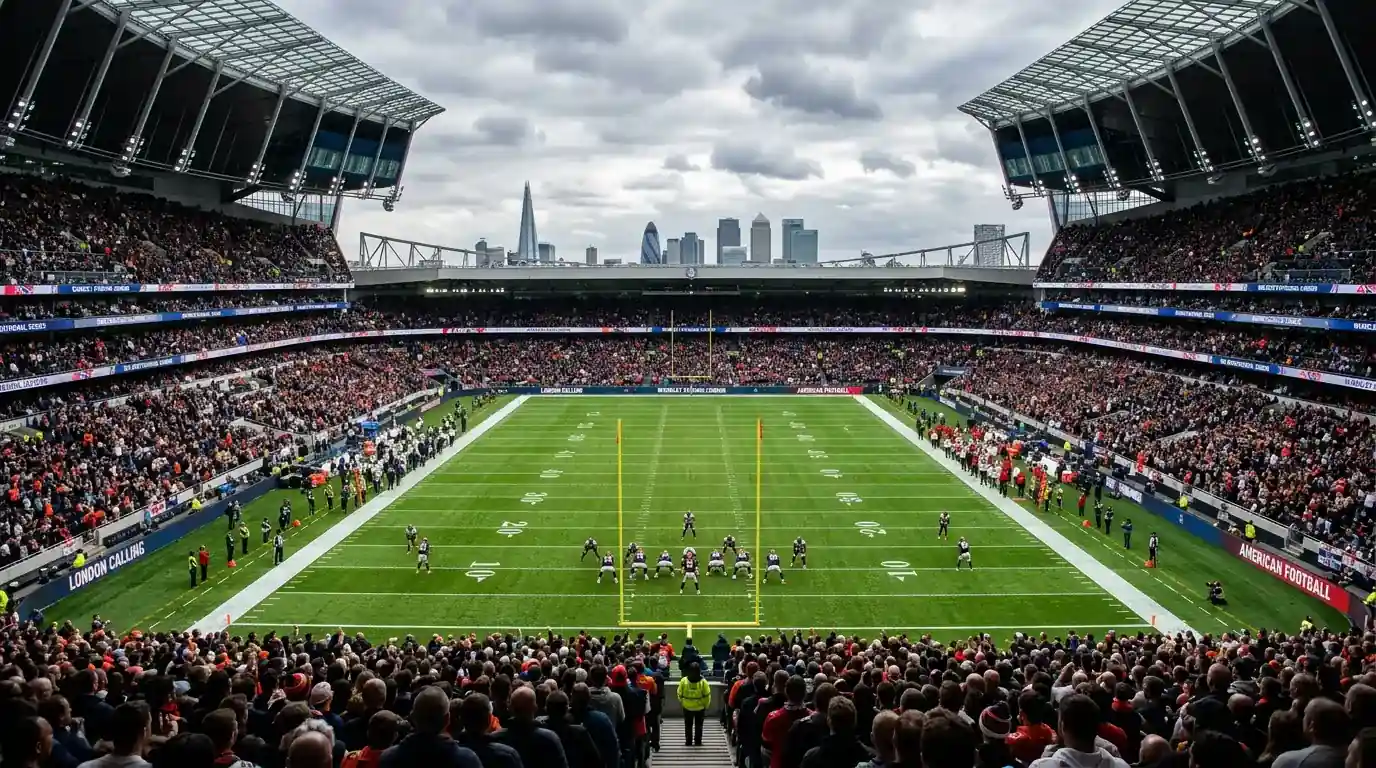
Every autumn, the NFL lands in London and brings something unusual with it — a set of games that look like normal regular-season fixtures on the schedule but behave differently on the field and, more importantly, on the betting board. The London games are not neutral-site exhibitions. They are real games with playoff implications, played by real teams that have crossed an ocean to compete. And the crossing matters.
Since 2007, the UK has hosted 42 regular-season NFL games, and the data from those fixtures tells a consistent story. Scoring tends to be lower than the season average. Offensive tempo is often slower. Turnovers tick upward. The games feel sluggish in a way that does not always show up in the final score but reliably shows up in the player prop results. I have bet London games differently from the rest of the schedule for four seasons now, and the adjustments have been among the most profitable changes I have made to my prop process.
Learn more about prop bets for nfl on our main page.
Travel, jet lag and performance
The travel factor is the most discussed and least precisely quantified variable in London game analysis. Both teams fly across the Atlantic, but the disruption is not symmetrical. Teams that arrive early in the week — typically Wednesday or Thursday — have more time to adjust their body clocks. Teams that arrive late — Friday or even Saturday — carry the full weight of jet lag into game day. The direction of travel matters too: eastbound flights are more disruptive to circadian rhythm than westbound, which means US teams flying to London suffer more than they would flying the same distance westward.
What does this mean for props? In my tracking, London games produce quarterback passing yards totals that average 8-12% below the season mean for the same quarterbacks in domestic fixtures. Rushing yards are less affected — the running game is more mechanical and less dependent on reaction time and decision speed. Receiving yards follow the passing yards trend downward. The implication for prop betting is that the under on passing-related player props carries a structural advantage in London games, provided the line has not already adjusted for the travel effect.
The books do adjust, but the adjustment is inconsistent. Some UK sportsbooks reduce passing yards lines by 10-15 yards for London fixtures. Others make minimal adjustments, apparently treating London games the same as any other road game. The gap between books that adjust and books that do not is the primary source of value in London game prop betting.
Kick-off times and UK betting volume
London games kick off at 14:30 or 18:00 UK time, which places them squarely in the middle of the British afternoon and early evening — primetime for UK punters. The contrast with the standard NFL schedule is dramatic: regular Sunday games begin at 18:00 UK time at the earliest, with the bulk of the action starting at 22:00 or later. London fixtures are the only NFL games of the week that a UK punter can watch live at a reasonable hour without sacrificing sleep.
More than six million people watched the 2025 London NFL games on television or via streaming platforms, and the live NFL audience on Sky Sports grew by 34% year on year. That viewership spike translates directly into betting volume. UK sportsbooks report their highest NFL prop handle of the season during London game weekends, and the increased liquidity creates tighter margins on London fixture props compared to late-night games where UK volume is thinner.
Henry Hodgson, the NFL’s head of UK and Ireland, has observed the broader trend driving this growth, noting that the number of avid fans is increasing alongside viewership and social media engagement, placing the sport in a healthy position with significant room for further expansion. The betting market reflects that trajectory — each London game weekend generates more prop activity than the last, and the books respond with deeper menus and more competitive pricing.
Historic London game prop results
I maintain a database of prop results from every London game since 2017 — the point at which UK sportsbooks began offering a wide enough prop menu to make the data meaningful. The patterns are instructive.
Passing yards unders have hit at a rate of approximately 56% across all London games in my sample, compared to a league-wide baseline of roughly 50%. The edge is not enormous, but it is consistent and statistically significant over 40-plus games. Rushing yards results are closer to the baseline, with overs and unders splitting almost evenly. Touchdown scorer props — both anytime and first scorer — show no meaningful London-specific pattern, which makes sense because touchdowns are lower-frequency events that are less sensitive to the marginal performance declines caused by travel.
The most interesting pattern is in game totals for London fixtures. London games have gone under the game total at a rate of approximately 58% in my sample, driven primarily by the passing efficiency decline. If you backed the under on the game total in every London game since 2017, you would be meaningfully ahead — not because every game goes under, but because the line is set too high often enough to create a persistent edge. The books are improving their London game pricing each year, and this edge is narrowing, but it has not disappeared.
Defensive and turnover-related props tell a complementary story. London games produce slightly more turnovers than the season average, which aligns with the travel-and-fatigue thesis — tired players make more mistakes with the ball. Interception props in London fixtures have gone over at a modestly elevated rate, though the sample is too small to declare the pattern statistically significant. What I can say is that the directional evidence is consistent: London games are messier, lower-scoring, and more error-prone than domestic fixtures, and the prop market does not fully price this in.
Bookmaker coverage for London fixtures
UK sportsbooks treat London games as marquee events and expand their prop menus accordingly. During a standard Sunday slate, a mid-tier UK sportsbook might offer 30-50 prop markets per game. For a London fixture, the same book might offer 80-120 markets, including niche props like first team to call a timeout, total number of penalties, and specific quarter-by-quarter scoring markets that are not available for regular games.
You may also find NFL Novelty Bets and Specials at UK Bookmakers: Beyond the Stats interesting.
The expanded menu creates opportunities, but it also creates traps. The additional markets are priced with wider margins because the book has less historical data and less sophisticated models for niche London game props. A “total penalties in the first half” prop carries a margin that can approach 20%, compared to 8-12% for a standard passing yards prop. The depth of the menu is appealing, but the quality of the pricing degrades as you move further from the core markets.
My approach is to focus on the core player props for London games — passing yards, rushing yards, and touchdowns — where my travel-adjustment thesis applies and the margin is manageable. I avoid the novelty and ultra-niche markets that the books add for London weekends, not because they are uninteresting but because the margin makes them unprofitable even when the underlying analysis is correct.
One practical note on line timing: UK sportsbooks typically publish their London game prop lines earlier in the week than they do for standard Sunday fixtures. A Thursday-morning publication gives punters a full 48 hours to compare prices and identify discrepancies between books before the line stabilises. I find that the best London game prop value appears in that early window, before the market consensus forms and the prices converge. By Saturday afternoon, most books have aligned their London game lines with the broader market, and the shopping opportunities diminish.
For a broader view of the data that underpins UK NFL betting — fan base size, market value, and growth trends — the UK betting market statistics piece provides the numbers behind the phenomenon.
Do London game prop lines differ from US fixture lines?
Yes. Some UK sportsbooks adjust player prop lines for London games to account for travel and jet lag effects, typically reducing passing yards lines by 10-15 yards. However, the adjustment is not universal — some books make minimal changes, which creates line-shopping opportunities for punters who believe the travel factor is significant.
How does the early UK kick-off time affect live prop volume?
London games kick off during UK afternoon hours (14:30 or 18:00), which aligns with peak betting activity for British punters. Live prop volume is significantly higher for London fixtures than for standard NFL games that start at 22:00 or later UK time. The increased volume generally produces tighter live prop margins during London games.
Has the NFL added more London prop markets over time?
Yes. UK sportsbooks have expanded their prop menus for London games each year as the fixtures have grown in popularity. A London game in 2025 typically offered 80-120 prop markets compared to 30-50 for a standard regular-season fixture. The expanded menu includes niche markets like penalty totals and quarter-specific scoring props that are not always available for other games.
Prepared by the Prop Bets for nfl editorial staff.