NFL Live Prop Betting in the UK: In-Play Markets and How They Move
 Available in US
The shift from pre-game to in-play and why props lead it
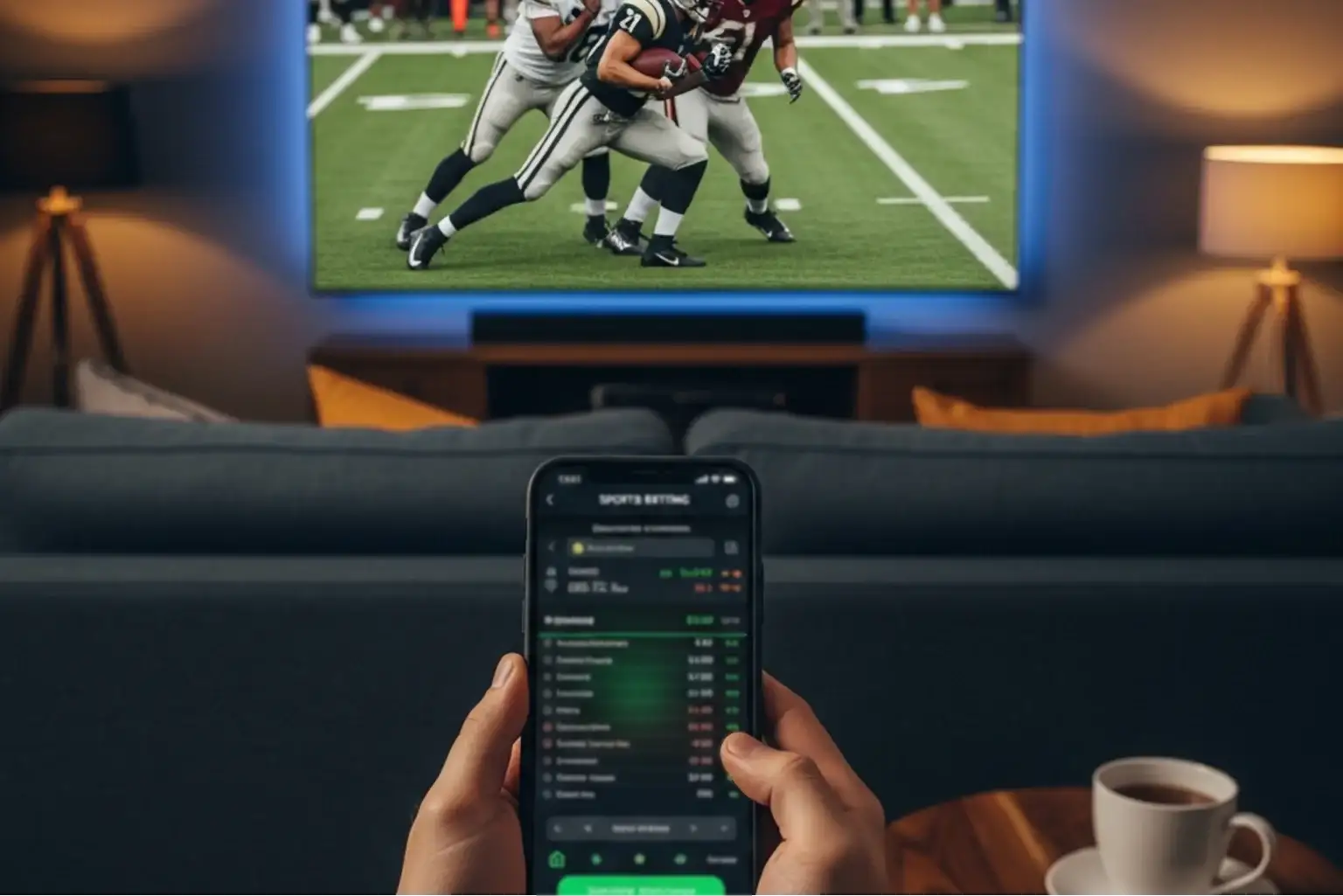
Five years ago, live betting on NFL props at UK sportsbooks meant refreshing a page and hoping the market was still open. Today, the same platforms offer real-time player prop updates between plays, live segment totals during commercial breaks, and next-drive markets that refresh every two minutes. The shift has been dramatic, and it has changed the way I allocate my weekly NFL betting time.
Across the NFL betting landscape, 48% of bettors still prefer pre-game wagers, while only 25% gravitate toward live bets. That gap is closing, but it remains wide enough to create structural differences in how the markets behave. Pre-game lines benefit from hours or days of price discovery — sharp money arrives early, the line adjusts, and by kickoff the price is relatively efficient. Live lines are set on the fly, recalibrated after every significant play, and vulnerable to overreaction and underreaction in ways that pre-game lines are not.
Jamie Reynolds, a UK-based sports marketing consultant, has observed that British NFL fans are less tribal than their American counterparts — they follow the sport itself rather than pledging loyalty to a single franchise. That broad engagement means UK punters are more likely to watch multiple games simultaneously and more willing to bet on live markets across several fixtures, which creates a wider surface area for in-play prop opportunities.
Find the best options for prop bets for nfl.
Live prop market types
The live prop menu at UK sportsbooks has expanded considerably, but it still breaks into three distinct categories: updated pre-game props, next-event props, and segment props.
Updated pre-game props are the most familiar. A quarterback’s passing yards line that opened at 255.5 before kickoff might adjust to 265.5 at halftime if the first half was pass-heavy, or drop to 220.5 if the team has been running the ball. The line moves based on actual performance and the book’s updated projection for the remainder of the game. These markets are the most analytically tractable because you can compare the live line against your own updated projection using first-half data.
Next-event props are the fastest-moving and highest-margin markets. “Will the next play be a run or a pass?” “Will the next drive result in a score?” “Will the next completed pass go for more than 15 yards?” These markets refresh constantly and are priced with margins of 15-25% — far wider than pre-game props. The speed of the market is the book’s primary defence: you have seconds to evaluate and place a bet before the next play begins. I avoid next-event props almost entirely because the margin eats any edge I might have, and the pace encourages impulsive decision-making.
Segment props — second-half totals, fourth-quarter totals, remaining-game player props — sit between the other two categories in both margin and analytical opportunity. These markets open during breaks in play and remain available for minutes rather than seconds, giving you time to think. The margin is wider than pre-game but narrower than next-event, and the analytical framework is similar to pre-game segment analysis with the added advantage of first-half data.
Latency, feed delay and what it means for punters
Every live bet you place at a UK sportsbook is subject to a time gap between what is happening on the field and what you see on your screen. This gap — latency — varies from 5 to 30 seconds depending on the broadcast feed, the sportsbook’s data provider, and the speed of your own internet connection. It sounds trivial. It is not.
In the US, professional live bettors at stadium seats or with low-latency data feeds exploit this gap systematically. They see a touchdown scored on the field before the sportsbook’s model has processed the event, and they bet accordingly. UK punters watching on Sky Sports or an NFL Game Pass stream are on the wrong side of this gap — your feed is delayed, and the sportsbook’s data feed is faster. By the time you see a big play and react, the line has already moved.
This does not make live prop betting unplayable for UK punters, but it does change the approach. The edge in live props for a UK bettor is not speed — it is context. You cannot beat the data feed to a play-by-play update, but you can maintain a better contextual model than the algorithm. If you understand that a team trailing by 14 in the third quarter will abandon the run game and throw 40 times in the fourth quarter, you can project the quarterback’s final passing yards total more accurately than the live model, which often anchors too heavily to the first-half pace. The contextual read takes minutes to develop, not seconds, and it is immune to latency.
Using live props to hedge pre-game positions
The most disciplined use of live props I have developed is hedging. When a pre-game prop bet is tracking well at halftime — say, I backed a quarterback over 255.5 passing yards and he already has 180 at the break — the live market offers an opportunity to lock in profit or reduce downside.
The mechanics are straightforward. If the quarterback has 180 yards at halftime, the live passing yards total for the full game might reset to something like 285.5. If I believe the second-half pace will slow — perhaps the team is leading and will run the ball more — I can bet the under on the live total at 285.5 to hedge my pre-game over at 255.5. If the quarterback finishes between 256 and 285, both bets win. If he finishes above 285, my pre-game bet wins and the live hedge loses, but the pre-game profit absorbs the loss. If he finishes below 256, my pre-game bet loses but the live under cashes.
Hedging is not always the optimal play — it reduces variance but also caps upside. I hedge selectively, usually when the pre-game bet is tracking significantly ahead of pace and I have reason to expect a second-half slowdown. The discipline is knowing when to let a winning bet run and when to take the guaranteed middle. Most UK punters hedge too frequently out of anxiety rather than analysis, which erodes long-term returns.
Discipline in live prop decisions
Live betting is where bankrolls go to die. I have lost more money on impulsive live props than on any other category of NFL bet, and every experienced prop bettor I know says the same thing. The combination of constant stimulation, rapid price changes, and the illusion of real-time information creates an environment optimised for bad decisions.
Read our detailed review of NFL London Games and Prop Betting: How UK Fixtures Reshape the Markets.
My rules for live prop betting are strict. I do not bet on next-event markets. I do not place a live bet within 30 seconds of seeing a big play — the emotional reaction is almost always wrong. I limit myself to a maximum of three live prop bets per game, and I pre-set the amount I am willing to stake in-play before kickoff. If I hit that limit, I stop, regardless of what the markets are showing.
The most important rule is the simplest: I only bet live props when I have a thesis that was formed before the game started and confirmed by first-half evidence. If I pre-identified a quarterback as a second-half volume passer and the first half confirms that the game script is heading in that direction, the live over on his passing yards is a disciplined extension of my pre-game analysis. If I am reacting to something I did not anticipate, I am gambling, not betting, and the distinction matters over hundreds of wagers.
Live prop mechanics connect directly to the cash-out decision — understanding how books price cash-out offers in real time helps you decide whether to close a position early or let it ride through the final quarter.
Are live prop odds usually worse than pre-game?
Yes. Live prop markets carry wider margins than pre-game markets because the book is pricing under time pressure and managing risk on rapidly changing outcomes. The typical overround on a live player prop is 12-20%, compared to 8-15% pre-game. The wider margin is the cost of real-time access.
What share of NFL bets are placed in-play in the UK?
Across the broader NFL betting market, roughly 25% of bettors prefer in-play wagering, with 48% still favouring pre-game bets. UK-specific figures are not published separately, but the proportion of live betting is growing each season as sportsbooks expand their in-play prop menus for NFL.
How do TV broadcast delays affect live prop betting?
UK viewers watching NFL on Sky Sports or streaming services experience a 10-30 second delay relative to the live action. Sportsbook data feeds are typically faster than the broadcast, meaning the book knows about a big play before you see it. This delay makes reaction-based live betting unprofitable for UK punters — the edge lies in contextual analysis, not speed.
Written by the editors at Prop Bets for nfl.