NFL Team Props in the UK: Totals, Halves and Score-First Markets
 Available in US
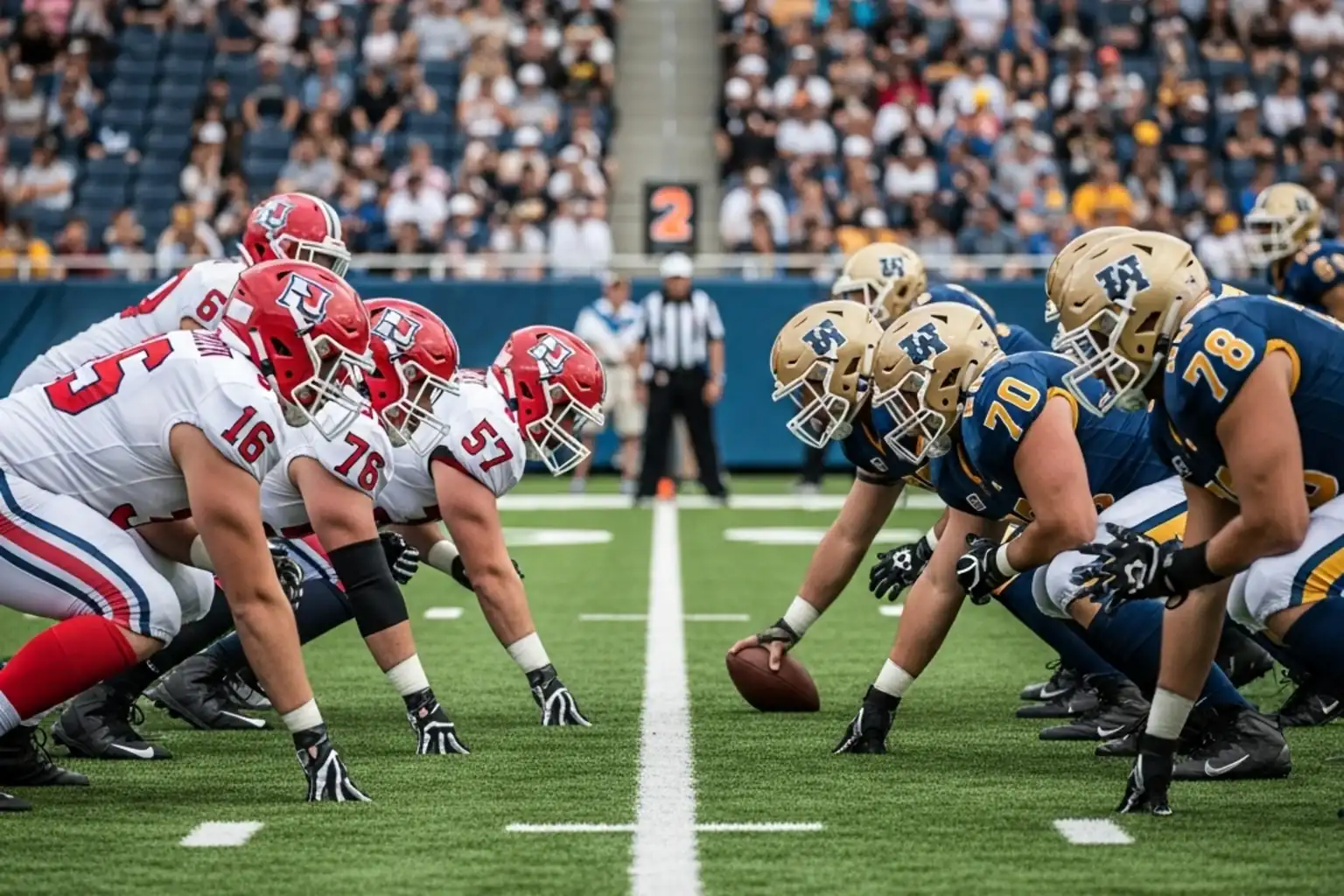
Where team props sit between game lines and player props
I remember the first time I looked at an NFL team total and realised it was a completely different bet from the game total. It sounds obvious now, but for months I had been betting game totals without understanding that the books were offering me each team’s expected scoring output as a separate market. That distinction changed the way I approached every Sunday slate, because team totals allow you to take a directional view on a single offence without needing to predict what happens on both sides of the ball.
Team props occupy a middle ground in the UK sportsbook menu. They are not as granular as individual player props — you are not predicting a specific quarterback’s passing yards or a running back’s rushing total — but they are more specific than the standard point spread or game total. The category includes team totals (how many points one side will score), first-to-score and last-to-score markets, half and quarter totals, and team-level turnover and sack markets. At UK books, these markets carry tighter margins than player props because they attract more informed money, but they also offer structural advantages that the spread and game total do not.
Henry Hodgson, the NFL’s head of UK and Ireland, has noted that the growth in fandom is evident across television, social media, and live events — and that growth has expanded the team-level prop menus at UK sportsbooks. The broader the audience, the more markets the books are willing to offer, and team props have been among the biggest beneficiaries of the NFL’s UK expansion.
Team total points over/under
The team total is the foundational team prop. It sets an over/under on how many points a single team will score in the game, and it is derived from the combination of the game total and the point spread. If the game total is 47 and Team A is favoured by 3, the implied team totals are roughly 25 for Team A and 22 for Team B. The books do not publish these as simple arithmetic — they adjust for rounding, margin, and their own assessment of scoring distribution — but the derivation is close enough for practical purposes.
The analytical advantage of team totals over game totals is that you can isolate one side of the ball. If I believe that one offence is significantly better or worse than the market expects, I can express that view directly through the team total without needing to have an opinion on the opposing offence. A game total bet forces me to predict the combined output of both teams; a team total lets me focus on the one I have conviction about.
I find the most value in team total unders for teams that the public overrates offensively. A team coming off a 35-point performance attracts over money on the team total the following week, even if the opponent is a significantly tougher defence. The recency bias that afflicts player prop markets also affects team totals — and because team totals are simpler markets with lower margins, the mispricing can be subtle but persistent. I track each team’s actual scoring output against their team total line week by week, looking for teams that consistently go under their number in specific defensive matchup profiles.
First team to score and last to score
First-to-score is one of the most popular team props at UK sportsbooks during primetime NFL games. The market is straightforward: which team will put points on the board first? The pricing typically ranges from 1.75 to 2.10 on each side, depending on the perceived offensive quality and the expected game script. Home teams score first approximately 52-54% of the time over large samples, which means the home side often offers slight value at standard UK prices.
What makes first-to-score interesting analytically is the interaction with the opening kickoff and the first possession. The team that receives the opening kickoff has the first opportunity to score, and approximately 25-30% of opening drives result in points. If you have a view on which team will receive the opening kick — based on historical tendencies, coaching preferences, and game conditions — you can estimate a first-to-score probability that differs from the market’s default pricing.
Last-to-score is the mirror market, and it behaves very differently. The team trailing late in the game almost always scores last — garbage-time touchdowns, late field goals, and desperation drives in the final minutes ensure that the losing team frequently puts the last points on the board. This dynamic means that last-to-score props are counterintuitively biased toward the underdog, which surprises punters who assume the better team scores both first and last. I rarely bet last-to-score because the garbage-time dynamic makes the outcome feel more random than analytical, but punters who understand the late-game scoring patterns can find occasional value when the book prices the favourite as the likely last scorer.
Halves and quarters team props
UK sportsbooks break team totals into halves and quarters, creating segment-level team props that allow you to express a view on when a team will score rather than how much. The first-half team total is the most commonly available and most heavily traded, typically set at roughly 45-50% of the full-game team total — slightly below half because first-half scoring tends to be marginally lower than second-half scoring.
First-quarter team totals are the most volatile segment prop. The line is usually set between 2.5 and 6.5, and the margin is wider than on half or full-game team totals because the sample within a single quarter is so small. A single long touchdown drive can swing the outcome, and the pricing reflects this uncertainty. I find first-quarter team props useful primarily as bet builder components rather than standalone bets — the margin is too wide for the standalone play to offer consistent value, but as one leg of a correlated builder, the first-quarter team total can add edge when paired with a first-to-score or first-half total prop.
Second-half team totals are where the smart money concentrates. By halftime, you have observed 30 minutes of actual game action — tempo, play-calling tendencies, defensive adjustments, and weather effects — and you can form a more informed view than the pre-game line captures. The second-half team total reprices at halftime based on the first-half performance, but the repricing is not always accurate. If a team’s first-half struggles were caused by a fixable problem (a dropped interception, a missed field goal, a single busted coverage play), the second-half line may overcorrect, creating value on the over. I bet second-half team totals more frequently than any other segment prop.
Team turnover and sack markets
Team-level turnover and sack markets are among the newest additions to UK NFL prop menus, and they offer a genuinely different analytical challenge. Rather than predicting scoring output, these markets ask you to predict negative events — mistakes, pressures, and forced errors that disrupt the offensive plan.
The team turnovers prop sets an over/under — typically at 1.5 for each team or 2.5 to 3.5 for the game combined — on the total number of interceptions and fumbles lost. Turnovers are among the most volatile statistics in football. Even elite quarterbacks throw interceptions at unpredictable intervals, and fumble recovery is essentially random (the offence and defence recover fumbles at roughly 50/50 rates regardless of scheme or talent). This inherent randomness makes turnover props high-variance by nature, and I approach them with smaller stakes than scoring-based team props.
Sack markets are more modelable. The team sacks prop sets an over/under on how many times a team’s quarterback will be sacked, typically between 1.5 and 3.5. Sack volume is driven by the interaction between the opposing pass rush and the offensive line quality, adjusted for the quarterback’s mobility and the play-calling philosophy. A slow, immobile quarterback behind a weak offensive line facing a top-five pass rush is a reliable candidate for the sack over. I find sack props particularly valuable in primetime games where the books attract more casual volume and the line may not fully reflect the pass-protection mismatch.
For the game-level props that complement team-level markets — including total touchdowns, race-to-points, and longest-play markets — the game props guide covers the broader game-wide prop categories that share the same underlying game environment.
How are overtime points handled in team total props?
Overtime points count toward team total props at all major UK-licensed sportsbooks. If a team scores a field goal or touchdown in overtime, those points are added to their game-long total for settlement purposes. This applies to both the full-game team total and any segment props that include overtime in their scope.
Are race-to team props worth using as hedge bets?
Race-to props can function as partial hedges in specific situations. If you hold a team total over and the team scores quickly, a race-to bet on the opposing team can lock in partial value. However, race-to markets carry relatively wide margins, so the hedge cost is significant. I use race-to hedges only when the live pricing is generous enough to offset the margin — which happens infrequently.
Why do team total lines move more than game totals?
Team total lines are more sensitive to injury news, weather updates, and lineup changes because they isolate the scoring output of a single team. A starting quarterback being ruled out might shift a team total by 3-4 points while only moving the game total by 1-2 points, because the opposing team’s expected output partially offsets the impact. This higher sensitivity makes team totals more responsive to late-breaking information.
Prepared by the Prop Bets for nfl editorial staff.