NFL Injury News and Prop Bets: Reading the Late Reports for UK Punters
 Available in US
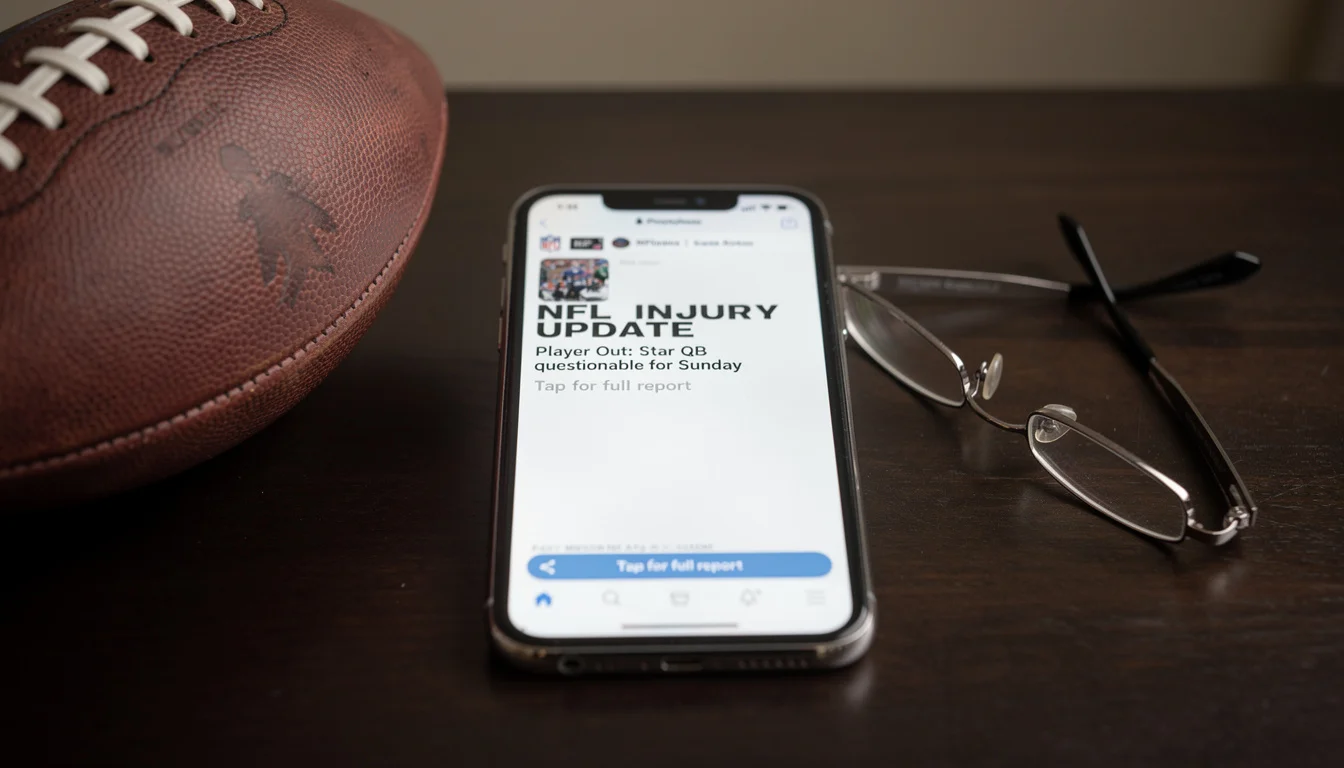
Why the injury report is the prop punter’s single biggest signal
There is no piece of publicly available NFL information that moves prop lines more reliably than the injury report. A starting running back listed as questionable on Friday can shift his rushing yards line by 15 yards by Saturday afternoon. A wide receiver downgraded from probable to doubtful can cause his teammate’s target share projection to spike, creating value on props that have nothing to do with the injured player himself. The injury report is not a sideshow — it is the centre of the prop betting universe, and UK punters who do not track it systematically are operating at a disadvantage against every bettor who does.
I have been tracking injury-report-to-prop-line relationships for five seasons, and the pattern is consistent. The first round of line movement happens when the Wednesday injury report is published. The second round comes with Friday’s report. The third and most violent movement happens 90 minutes before kickoff, when official inactive lists are released. Each round creates opportunities, but the last round is the one that matters most — and it is the one that UK punters are least equipped to exploit. The expected NFL handle reached $30 billion for the 2025 season, and a meaningful fraction of the late-breaking money that moves those lines is driven by injury information.
Find the best options for prop bets for nfl.
Practice status codes explained
The NFL requires all 32 teams to publish injury reports three times per week during the regular season — Wednesday, Thursday, and Friday for Sunday games. Each report lists injured players with a practice status (Did Not Participate, Limited Participant, or Full Participant) and a game status designation that indicates the likelihood of playing.
The game status designations are the ones that matter for prop betting. “Out” means the player will not play — his props should be voided or removed from the board. “Doubtful” means the player is unlikely to play, with a historical conversion rate of roughly 20-25% — he plays about one time in four. “Questionable” is the most common and least informative designation, with a historical play rate of approximately 70-75%. “Probable” was removed from the NFL’s designation system in 2016, though some analysts and media outlets still use the term informally.
The strategic value is in the transitions. A player who moves from “Questionable” on Friday to “Doubtful” on Saturday is telling you something: the injury is not improving. A player who moves from “Did Not Participate” on Wednesday to “Full Participant” on Friday is telling you something different: the injury was managed cautiously, and the player is expected to perform normally. The prop line adjusts to the final designation, but it does not always fully adjust to the trajectory of the week’s reports. A player who was limited all week and squeaks through to play may perform below his baseline even if the book sets his line at the standard number.
The 90-minute inactives window
Ninety minutes before kickoff, every NFL team submits its official inactive list. This is the definitive answer to every “will he play?” question, and it triggers the final round of prop line movement. For UK punters, the timing is critical: most Sunday NFL games kick off at 18:00 UK time, which means the inactive list drops at 16:30. If you are at work, at dinner, or simply not watching your phone at 16:30 on a Sunday, you miss the window.
The 90-minute window creates two types of prop opportunity. The first is direct: a player previously listed as questionable is declared inactive, and his props are voided. If you had a bet on him, you need to know immediately whether your sportsbook voids the bet or settles it as a loss. Most UK-licensed operators void player props when the named player is inactive, but the timing of the void can vary — some books process it immediately, others wait until after the game.
The second opportunity is indirect and more valuable. When a key player is declared inactive, the prop lines for his teammates and opponents shift. If a starting wide receiver is out, the quarterback’s passing yards line may drop (fewer reliable targets), the second receiver’s yards line may rise (more targets available), and the opposing defence’s prop markets may adjust. The fastest bettors — those who see the inactive list and immediately assess the downstream effects — can place bets before the book’s trading desk has finished repricing the secondary markets. This is where UK punters face a structural disadvantage: the information originates in the United States, the fastest bettors are American, and the UK punter is on the wrong side of both the time zone and the latency gap.
Chain reactions when a star is out
The most profitable injury-related prop plays are not bets on the injured player — those props are usually voided. They are bets on the players who absorb the injured star’s role. Understanding these chain reactions is a skill that separates analytical prop bettors from the crowd.
When a starting running back is ruled out, the backup’s rushing yards line rises, but the magnitude of the rise depends on whether the team uses a single backup or a committee. A clear backup in a one-man replacement role might see his line jump by 30-40 yards. A committee replacement might see two or three players’ lines rise modestly. The prop value is highest when the backup is clearly identified and the book underestimates his expected workload.
Receiver injuries produce more complex chains. When a top receiver is out, the targets do not simply transfer to the next receiver — they redistribute across the entire passing game. The second receiver might absorb 30% of the missing targets, the tight end picks up 20%, the running back catches more passes out of the backfield, and the overall passing volume may decline because the quarterback has fewer trusted options. I find the most reliable value in the tight end’s receiving yards prop after a top receiver is declared out, because tight-end target shares spike in these situations but the prop line adjustment for tight ends is typically smaller than for receivers.
The UK punter’s late-information disadvantage
The time zone gap is a fact of life for UK NFL prop bettors, and it creates a structural disadvantage that cannot be fully eliminated. When the 90-minute inactive list drops at 16:30 UK time on Sunday, American bettors have had the same information for zero seconds longer than you — but they are awake, alert, and sitting in front of their screens. Many UK punters are in the middle of their afternoon, not actively monitoring NFL news, and the window closes quickly.
Read our detailed review of NFL Kicker Props: Field Goals, Extra Points and Longest Made Markets.
My mitigation strategy is simple but requires discipline. I set an alarm for 16:25 on every NFL Sunday. When it goes off, I open the NFL’s official injury page and my three primary UK sportsbooks. I scan the inactive lists for surprises — players I expected to play who are out, or players I expected to be out who are active. If I find a surprise, I have a pre-prepared list of downstream prop plays: the backup running back’s rushing yards, the secondary receiver’s target-based props, the adjusted game total. I do not make decisions in the moment; I execute pre-planned plays based on contingencies I identified during the week.
This approach does not eliminate the disadvantage. American sharp bettors with faster data feeds and automated systems will always be first to the market after an injury surprise. But the UK punter’s window is not zero. Most UK sportsbooks take 5-15 minutes to fully reprice their prop menus after an inactive list surprise, and if your pre-planned plays are ready, you can get a bet placed before the market has fully adjusted.
For the broader pattern of mistakes that UK punters make when processing information under time pressure, the common prop betting mistakes guide covers the behavioural traps that hit hardest in exactly these high-speed situations.
What happens to my prop bet if a player is listed inactive 90 minutes before kick-off?
At most UK-licensed sportsbooks, player props are voided when the named player is officially declared inactive before the game begins. Your stake is returned. However, the timing of the void varies — some books process immediately upon the inactive list publication, while others settle after the game concludes. If you are unsure, check your sportsbook’s NFL prop settlement rules or contact customer support before the game starts.
Do UK books void player props for late scratches automatically?
Generally yes, but with caveats. If a player is on the official inactive list before kickoff, most UK books void the prop automatically. If a player starts the game and then leaves due to injury mid-game, the prop typically stands and is settled based on the player’s actual stats at the time of exit. The distinction between pre-game inactivity and in-game injury is critical — only pre-game scratches trigger voiding at most platforms.
How can a UK punter follow US injury news in real time?
The most reliable real-time sources are the NFL’s official injury report page and the social media accounts of NFL beat reporters who cover individual teams. Setting up notifications from dedicated NFL news aggregators or following a curated list of NFL reporters provides faster updates than waiting for UK sportsbook or media coverage. The official inactive lists are published 90 minutes before kickoff — 16:30 UK time for standard Sunday games.
Published by the Prop Bets for nfl team.