NFL Prop Bets vs Spread Betting: Which UK Approach Suits Which Punter
 Available in US
Two markets that look similar, behave differently
A quarterback passing yards over/under and a point spread are both two-way markets priced at roughly even money. Both ask you to pick a side. Both are settled based on what happens on an NFL field. From the outside, they look like variations of the same thing. From the inside — from the perspective of someone who has bet both for years — they are fundamentally different products with different risk profiles, different sources of edge, and different demands on your time and bankroll.
The distinction matters for UK punters deciding where to focus their NFL betting effort. Point spreads are the backbone of American football betting. Sixty-one percent of NFL bettors prefer spreads, and the market is the most heavily traded, most efficiently priced, and most difficult to beat over time. Player props attract less volume, carry wider margins, and offer pockets of inefficiency that the spread market has long since eliminated. Bill Miller of the American Gaming Association has noted that the record figures across commercial gaming demonstrate broad consumer appetite across all regulated markets — but within those markets, the competitive dynamics vary enormously.
Learn more about prop bets for nfl on our main page.
Mechanics side by side
A point spread is a prediction about the margin of victory. If the spread is -3.5 for Team A, Team A must win by four or more points for the bet to cash. The bettor’s task is to assess whether the margin of victory will exceed the line. The inputs are team quality, matchup dynamics, home-field advantage, and scheduling factors. The analysis is holistic — you are evaluating the entire game as a single outcome.
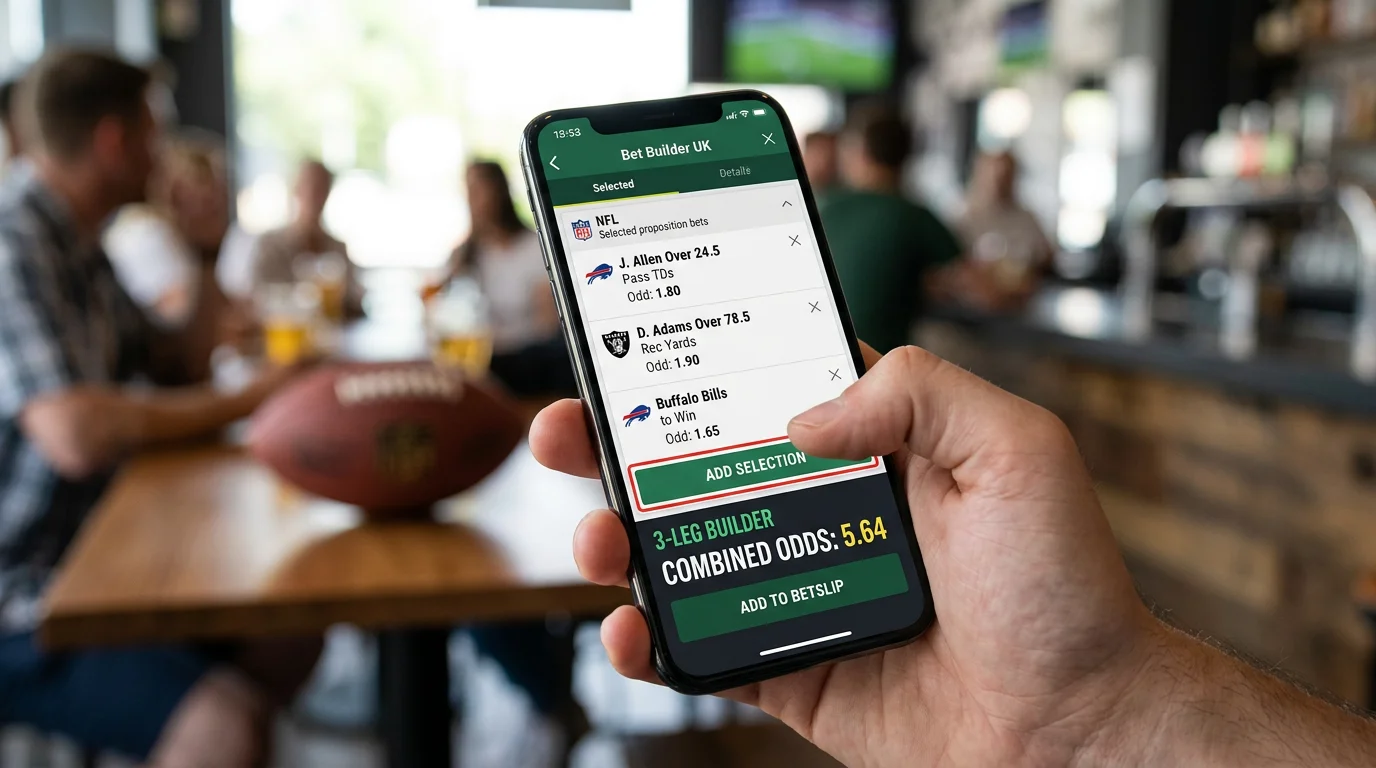
A player prop is a prediction about an individual statistical output. If a quarterback’s passing yards line is 255.5 over/under, the bettor’s task is to assess whether the quarterback will exceed that number. The inputs are narrower and more specific: the player’s recent form, the opposing defence’s tendencies against the pass, the game script, the weather, and the play-calling philosophy of the offensive coordinator. The analysis is granular — you are evaluating one person’s production within the context of a team sport.
The mechanical difference has a practical consequence. Spread betting requires you to understand how two teams interact. Prop betting requires you to understand how one player will perform given specific conditions. The informational demands are different in kind, not just in degree. A punter who is excellent at evaluating team-level matchups may be mediocre at projecting individual player performance, and vice versa. Knowing which analysis comes more naturally to you is the first step toward choosing the right market.
Variance and bankroll impact
Player props are higher-variance bets than point spreads, and this difference has significant bankroll implications. A point spread outcome is determined by the aggregate performance of 46 players per team across 60 minutes of football. An individual player prop is determined by one person’s output, which is subject to game script shifts, early injury, play-calling changes, and random fluctuation that the team-level aggregate smooths out.
In practical terms, a prop bettor with a genuine 3% edge will experience longer losing streaks and wider bankroll swings than a spread bettor with the same edge. The variance demands smaller unit sizes — I stake 1-2% of my prop bankroll per bet, compared to the 2-3% that many spread bettors consider standard. The smaller stakes mean that each individual bet feels less significant, which is actually an advantage: it reduces emotional decision-making and encourages the volume-based approach that prop betting rewards.
The higher variance also means that prop betting requires a larger sample before you can assess whether your strategy is working. A spread bettor can draw meaningful conclusions from 100-150 bets. A prop bettor needs 300-500 bets for the signal to emerge from the noise. Patience — genuine, month-over-month patience with uncertain results — is the price of admission to profitable prop betting, and not every punter is temperamentally suited to pay it.
Where informational edge comes from in each
The spread market is one of the most efficient betting markets in the world. The line is set by sophisticated models, sharpened by professional bettors who move the number before the public even logs on, and refined over hours of price discovery. By kickoff, the spread is usually within one point of the “true” number, and beating it consistently requires either better models than the market or faster access to information that the market has not yet priced — neither of which is easy.
The prop market is less efficient for structural reasons. First, the volume per market is lower, which means less price discovery and more opportunity for mispricing. Second, the analytical inputs are more specialised — projecting an individual player’s output requires data that the general betting public does not track (target share, snap counts, defensive matchup grades), which means the information asymmetry between informed and uninformed bettors is wider. Third, the number of prop markets per game (dozens or hundreds) means the book’s trading team cannot price each one with the same attention it gives the spread.
For a UK punter, the informational advantage in props is most pronounced for players and matchups where the UK sportsbook’s pricing is derived from American market data but adjusted imperfectly for the UK audience. If a UK book prices a rushing yards prop based on a US-originated line but does not fully account for a late injury report or a coaching change, the UK price may be stale relative to the current information. Punters who follow NFL news closely — particularly injury reports and lineup changes — can exploit these stale prices before the book updates.
Combining both approaches
I bet both spreads and props, and the combination has improved my overall results. The spread provides a framework for understanding the game as a whole — the expected flow, the likely game script, the competitive dynamics. The props provide specific opportunities within that framework — individual players whose expected output is mispriced given the game-level context.
You may also find Common NFL Prop Betting Mistakes UK Punters Make (And How to Stop) interesting.
The cross-pollination works in both directions. My spread analysis informs my prop selection: if I expect a team to fall behind early and throw frequently, the quarterback’s passing yards over becomes a prop candidate supported by the game-level thesis. My prop research informs my spread analysis: if I notice that a key player’s prop line implies a surprisingly low output, I may reconsider whether the spread has accurately captured that team’s offensive capability.
The bankroll should be separated. I maintain a distinct bankroll for spreads and a distinct bankroll for props, with different unit sizes and different tracking systems. Combining the two in a single bankroll obscures the performance of each strategy and makes it impossible to identify which approach is contributing to profits and which is dragging them down. The separation is administrative, not philosophical — both approaches are part of the same overall NFL betting practice, but they need to be measured independently to be managed effectively.
For an exploration of the specific mistakes that derail prop bettors who transition from spread betting, the common prop betting mistakes guide covers the behavioural errors that hit hardest when the variance profile changes.
Are NFL props more profitable than spread betting?
Not inherently. Props offer more pockets of inefficiency because the markets are less liquid and less efficiently priced, but they also carry wider margins and higher variance. A disciplined prop bettor can achieve positive ROI, but the same is true of a disciplined spread bettor. The question is which market suits your analytical strengths and temperament, not which market is objectively more profitable.
Which is easier to model: a player prop or a point spread?
A player prop is easier to model in isolation because the inputs are narrower — one player’s production depends on a smaller set of variables than the margin of victory between two teams. However, the variance around a player prop model is higher, which means the model needs to be applied across a larger sample to produce reliable results. Spread modelling is harder to do well but produces more stable results per bet.
Should beginners start with spreads or props?
Spreads are generally a better starting point because the analysis is more intuitive (which team will win and by how much) and the variance is lower. Props require more specialised knowledge and a higher tolerance for losing streaks. That said, beginners who are already NFL-literate and comfortable with player-level analysis may find props more engaging and may develop an edge more quickly in the less efficient prop market.
Written by the editors at Prop Bets for nfl.