NFL Quarter and Half Props: Segment Betting Explained for UK Punters
 Available in US
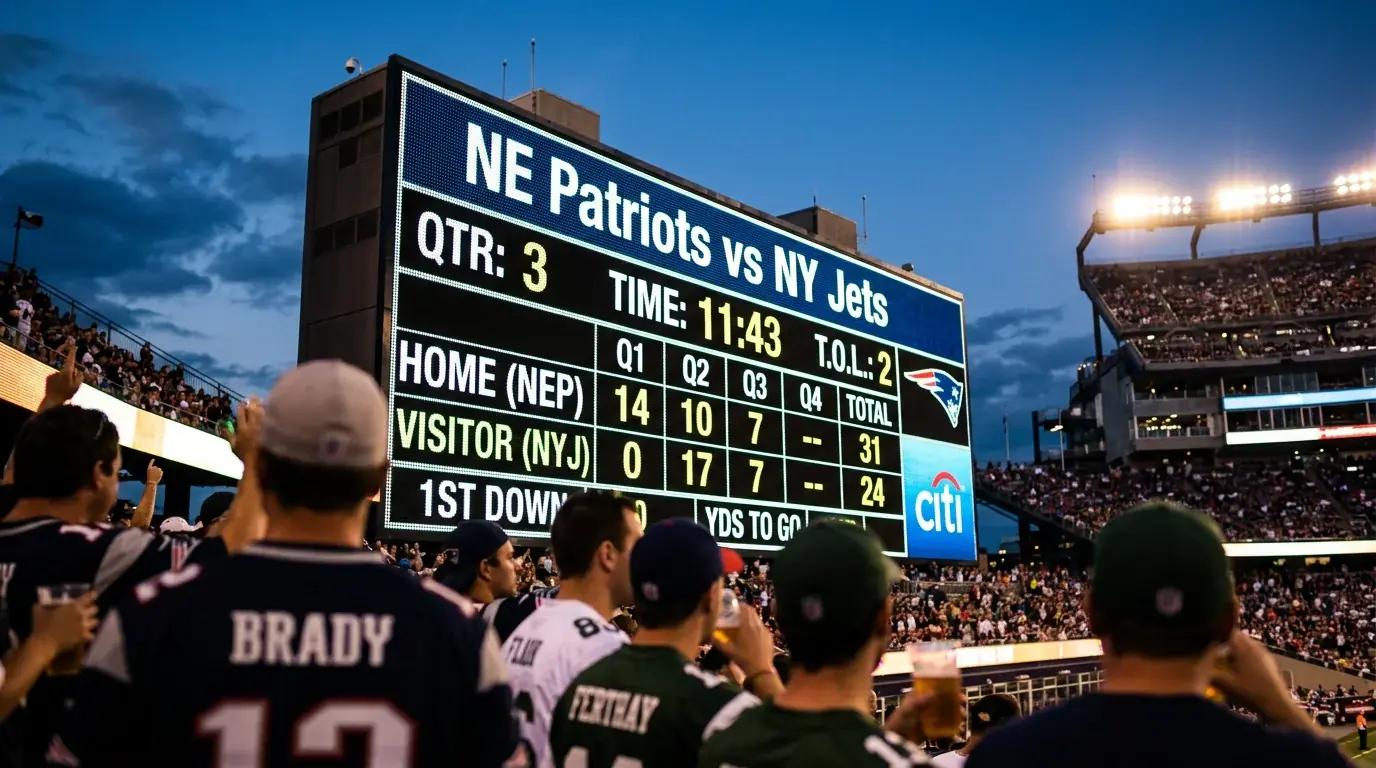
Why segment markets behave like miniature games
Think of an NFL game as four separate contests stitched together. Each quarter has its own rhythm, its own strategic logic, and — crucially for prop bettors — its own scoring profile. Segment betting treats these periods as independent markets, and the pricing reflects assumptions about scoring distribution that are often wrong in specific, exploitable ways.
I first noticed this during a Monday night game where the first-half total was set at 23.5 in a game totalled at 44.5. The implied split was almost exactly 50/50 — the book assumed equal scoring in each half. But one of the teams was notorious for slow starts and second-half explosions, and the other was a front-running team that built leads and then milked the clock. The actual expected split was closer to 55/45 in favour of the second half, which made the first-half under and the second-half over both viable plays.
The NFL as a whole is not evenly distributed across halves. League-wide data shows roughly 47% of scoring happens before halftime and 53% after. The second-half skew is structural — teams trailing at the break throw more aggressively, prevent defences soften in the fourth quarter, and garbage-time scoring inflates late totals. But team-level splits vary far more than the league average suggests, and that variance is where the edge lives.
Find the best options for prop bets for nfl.
First-quarter markets
The first quarter is the most volatile scoring period in the NFL, and the prop markets reflect that volatility with wider margins. The standard first-quarter total sits between 6.5 and 10.5 points, and the prices are typically juiced more heavily than any other segment market.
What makes Q1 betting distinct is the role of scripted plays. NFL coaching staffs spend the week preparing an opening-drive script — usually the first 15 to 20 plays, designed to exploit specific tendencies they have identified on film. Teams with elite coaching staffs and efficient scripted drives (think of the consistently fast-starting offences you see in the league’s top tier) convert their opening possessions at a higher rate than teams that improvise. This is not random noise — it is a repeatable skill, and it shows up in the data.
I track first-quarter scoring rates for each team across the season and compare them against the line. When a book sets a Q1 total of 7.5 for a game involving two teams that have averaged a combined 11 points in the first quarter over the past six games, the over has a quantifiable edge. The challenge is that six games is a small sample, and the variance around Q1 scoring is high enough that even well-founded bets will lose frequently. Bankroll discipline is non-negotiable in quarter props — the swings are sharper than in any other segment market.
The “will there be a score in Q1?” market — a simple yes/no prop — is one I bet more comfortably than the points total. Roughly 85% of NFL games produce at least one score in the first quarter. The “yes” price typically sits around 1.20 to 1.35, which is not generous, but the “no” at 3.50 to 5.00 is almost always overpriced relative to its true 15% probability. I play the “yes” only when the price drifts above 1.30, which happens occasionally in perceived defensive matchups.
First-half markets
First-half props are the segment market I bet most frequently, and the one where I have the most confidence in my process. The sample of two quarters is large enough to smooth some of the noise that makes Q1 betting volatile, while the strategic dynamics of the first half — opening-drive scripts, game-plan execution before adjustments, conservative play-calling in some matchups — create genuine informational edges.
The first-half total is derived from the game total, but the derivation is not a simple halving. The books apply a scoring-distribution assumption, typically allocating 46-48% of the game total to the first half. A game totalled at 48 might produce a first-half total of 22.5 or 23.5. The question for the bettor is whether the specific teams in this matchup will produce a higher or lower proportion of their scoring before the break.
Teams with strong running games that control possession tend to produce more first-half scoring, because they execute their game plan before the opponent adjusts. Teams with elite passing attacks that require halftime adjustments from the defence often produce more second-half scoring. The distinction is not absolute, but it is stable enough across multi-game samples to inform weekly plays. When I see a first-half total that implies a 50/50 split for a game involving a team that historically produces 55% of its scoring in the first half, the over becomes a core play in my weekly card.
First-half spread betting follows similar logic. If a team consistently builds leads in the first half, the first-half spread may offer better value than the game spread because the second-half collapse risk — garbage time, clock management, conservative play-calling with a lead — is eliminated from the equation. Prop bets account for 15-20% of total NFL handle at online bookmakers, but half-market props attract a smaller, more analytically inclined subset of that volume, which keeps the lines slightly less efficient than full-game markets.
Second-half and fourth-quarter markets
Second-half scoring is the noisiest segment of an NFL game, and that noise is both an opportunity and a trap. The structural factors that inflate second-half scoring — desperation passing by trailing teams, prevent defence, garbage-time touchdowns — are real, but they are also priced into the line. The question is whether they are priced correctly for a specific matchup.
I approach second-half props differently from first-half props. Instead of looking at team-level scoring splits, I focus on the expected competitiveness of the game. Blowouts produce inflated second-half scoring because the losing team throws constantly while the winning team runs the clock. Close games produce more conservative second-half play. The spread is the best proxy for competitiveness: games with spreads of seven points or more tend to produce more second-half scoring than the line implies, while games with spreads of three points or fewer tend to produce tightly contested second halves with lower scoring.
Fourth-quarter props are the most volatile segment market on the board, and I bet them rarely. The Q4 scoring environment depends almost entirely on the state of the game entering the quarter — a context that is unknowable before kickoff. A game that is 28-7 entering Q4 produces different scoring dynamics from a game that is 17-14. Because I cannot reliably predict the score at the end of Q3, I cannot reliably project Q4 scoring, and I have learned to leave that market to bettors with stronger live-betting discipline than mine.
Live segment props during breaks
The most interesting development in segment betting over the past three seasons has been the expansion of live segment props at UK sportsbooks. During commercial breaks and between quarters, the books now offer updated props for the remaining segments of the game — second-half totals, fourth-quarter totals, and occasionally third-quarter-specific markets.
Read our detailed review of NFL Receiving Yards Props: Target Share, Routes and Where Value Sits.
These live segment props are priced using the same models as pre-game segment props, but the inputs have changed. The first half has been played, and the book now has actual data on pace, play-calling tendencies, and defensive performance. The updated line should be more accurate than the pre-game line — and it usually is. But the adjustment is not instantaneous, and the gap between the event on the field and the updated line creates a brief window of exploitable inefficiency.
I have found the most value in live second-half totals immediately after a first half that was meaningfully different from expectations. If the first half of a game totalled at 48 produces only 10 combined points, the book recalibrates the second-half total downward — but it often overreacts, setting the second-half line too low because it anchors to the recent low-scoring evidence. The structural factors that drive second-half scoring — trailing teams throwing more, defensive fatigue — reassert themselves regardless of what happened in the first half. When the live second-half total drops below what the pre-game model would have suggested minus the first-half deficit, the over becomes attractive.
For a deeper look at how live markets function across the full game, the live prop betting guide covers market types, latency issues, and the discipline required to bet in-play without chasing.
Do first-half lines simply halve the game line?
No. First-half lines are derived from the game total but adjusted for the expected scoring distribution across halves. The typical NFL game produces 46-48% of its scoring in the first half, so a game total of 48 might generate a first-half total of 22.5 rather than 24. Team-specific splits can push this further in either direction.
Are fourth-quarter markets affected by garbage time?
Yes, significantly. Fourth-quarter scoring is heavily influenced by the game state entering Q4. Blowouts produce inflated Q4 scoring from trailing teams throwing desperately and leading teams running the clock with occasional scores. This makes Q4 totals extremely volatile and difficult to project before kickoff.
Can I bet on the highest-scoring quarter at a UK book?
Some UK sportsbooks offer this as a novelty market, typically for primetime games and playoff fixtures. The market asks which quarter will produce the most combined points, with ties sometimes voiding the bet or sometimes being settled as a push. Availability is inconsistent — check the full prop menu on game day.
Created by the ”Prop Bets for nfl” editorial team.