Correlated NFL Prop Bets: What Correlation Means for UK Punters
 Available in US
Why two props can share the same underlying story
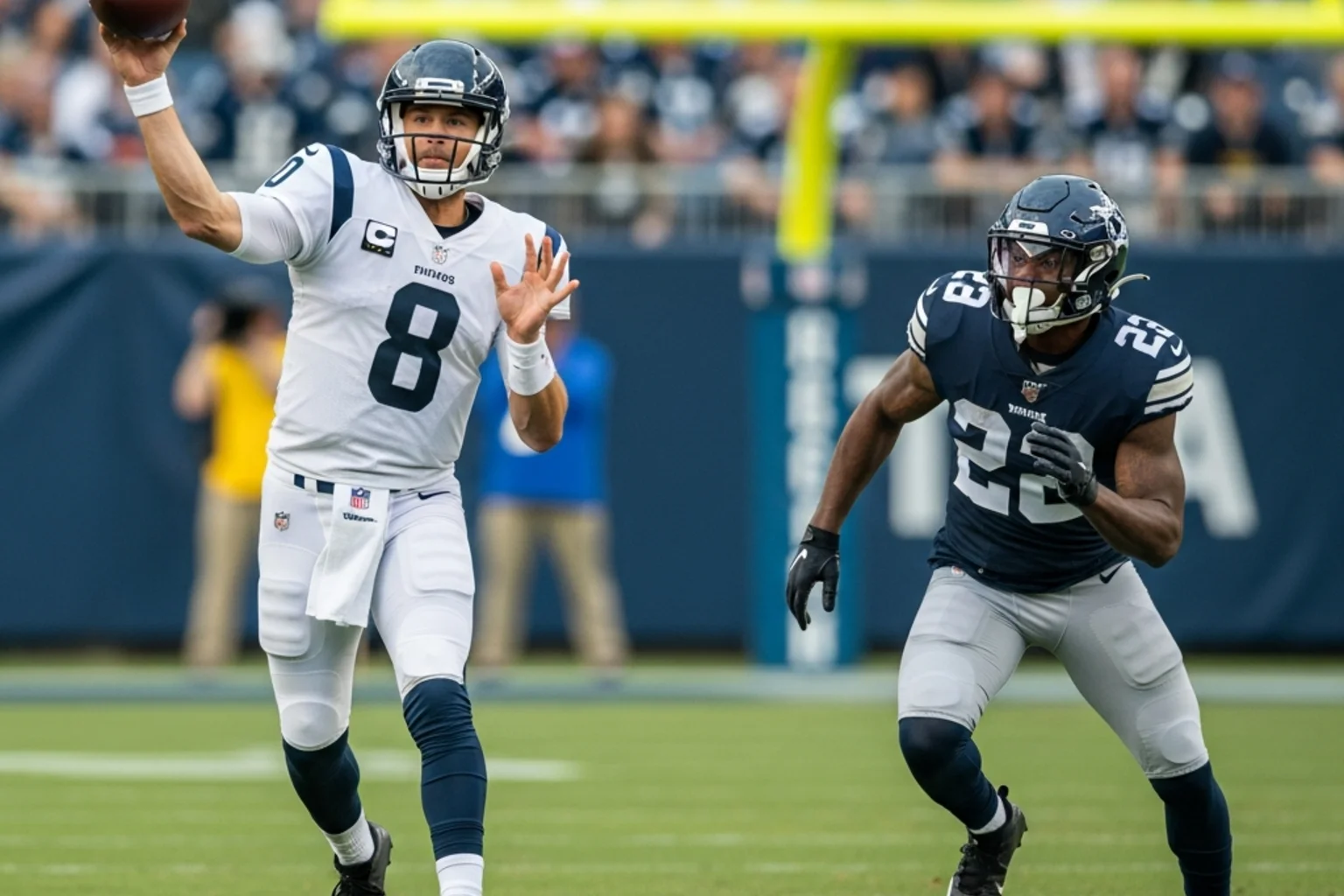
A quarterback throws for 320 yards. His top wide receiver catches 8 passes for 130 yards. His team scores 31 points. These three outcomes are not independent events that happened to coincide — they are interconnected outputs of the same offensive performance. The quarterback’s yards flowed through the receiver’s hands, and both contributed to the team’s scoring. In statistical terms, these props are correlated, and understanding correlation is the difference between building a bet builder that makes sense and one that is merely a collection of optimistic guesses.
Correlation in prop betting describes the degree to which two outcomes tend to move together. When one goes up, does the other go up too? If yes, the correlation is positive. When one goes up, does the other go down? That is negative correlation. When they move independently, there is no correlation. Every multi-leg bet you place — whether through a bet builder, a same-game parlay, or a traditional accumulator — implicitly takes a position on the correlation between legs. The question is whether you have thought about it explicitly.
The NFL betting market processed an expected $30 billion in handle for the 2025 season, and an increasing share of that volume flows through same-game parlays and bet builders where correlation is the central pricing challenge. If you are building multi-leg NFL bets at UK sportsbooks, correlation is not an academic concept — it is the variable that determines whether the price you are offered is fair, generous, or punitive.
Find the best options for prop bets for nfl.
Positive correlation examples
Positive correlation is the more intuitive of the two types. Two props are positively correlated when the same underlying game event drives both outcomes in the same direction.
The classic example is the quarterback-receiver stack. If a quarterback throws for 300 yards, his primary receiver is statistically likely to have a high-yardage game as well, because the receiver’s yards are a subset of the quarterback’s total. Backing the quarterback over on passing yards and the receiver over on receiving yards in the same bet builder creates a positively correlated pair. Both legs benefit from the same game script — a pass-heavy environment where the offence is playing from behind or engaged in a shootout.
Another strong positive correlation exists between team total over and anytime touchdown scorer on a player from the same team. If the team scores 28 or more points, the probability that any individual skill player on that team scored a touchdown rises substantially. The team total over and the touchdown scorer are driven by the same offensive output, making them positively correlated.
A subtler positive correlation links the game total over with individual player yardage overs on both teams. A high-scoring game produces more plays, more possessions, and more opportunities for both offences to generate statistics. Backing the game total over alongside a passing yards over for one quarterback and a rushing yards over for the opposing running back creates a three-leg slip where all legs benefit from a fast-paced, high-scoring environment.
Negative correlation examples
Negative correlation is less intuitive but equally important. Two props are negatively correlated when the same underlying game event drives one outcome up and the other down.
The most common negative correlation in NFL props exists between a team’s rushing yards and the opposing team’s time of possession. If one team dominates on the ground, it controls the clock, which limits the number of offensive snaps for the other team. Backing a rushing yards over for one team’s running back and a passing yards over for the opposing quarterback creates a negatively correlated pair — a dominant rushing performance implies fewer opportunities for the opposing passer.
Another negative correlation exists between a quarterback’s passing yards and his own team’s rushing yards. Teams that throw for 300 yards tend to run the ball less, and teams that rush for 180 yards tend to pass less. Pairing a passing yards over with a rushing yards over on the same team in a bet builder creates internal tension — both legs hitting simultaneously requires an unusual game where the offence is productive through both channels, which happens but is less common than the individual probabilities would suggest.
The practical consequence of negative correlation is that the true probability of both legs hitting is lower than the product of their individual probabilities. A bet builder that naively multiplies two negatively correlated legs overestimates the combined probability, which means the offered price should be lower than the naive multiplication. If the bet builder’s pricing engine does not adequately account for the negative correlation, the combined price will be too generous — a rare gift that you should take when you can identify it.
How UK books detect and price correlation
The bet builder pricing engine at a UK sportsbook uses a correlation matrix — a mathematical table that maps the expected relationship between every pair of markets in its NFL prop menu. When you add a leg to your bet builder, the engine looks up the correlation coefficient between the new leg and every existing leg, and adjusts the combined price accordingly.
Positive correlation reduces the combined price. If the naive multiplication of three legs produces 7.00, the positive correlation adjustment might bring the final price to 5.80. Negative correlation increases the combined price, because the true probability of all legs hitting simultaneously is even lower than the naive product implies.
The quality of the correlation model varies significantly across UK sportsbooks. The largest operators — those with dedicated NFL trading teams and access to American data feeds — run sophisticated models that capture most of the major correlations. Smaller operators may use simpler models that miss subtle correlations or overcompensate on obvious ones. I have noticed that mid-tier UK books tend to overprice the correlation between quarterback passing yards and same-team receiver yards (applying too large an adjustment) while underpricing the correlation between game total and individual yardage props (applying too small an adjustment). These systematic errors create pockets of value that persist because the books lack the volume to identify and correct them quickly.
Using correlation without overpaying for it
The goal of understanding correlation is not to build the most correlated bet builder possible — it is to build bet builders where the pricing engine’s correlation adjustment is either accurate or working in your favour.
Read our detailed review of NFL Defensive Player Props: Sacks, Tackles and Interceptions Markets.
When the engine overestimates the correlation between your legs (adjusts the price down too much), you are being underpaid for a combination that is less correlated than the engine thinks. This typically happens with legs from different teams or different statistical dimensions — the engine treats them as more connected than they actually are. When the engine underestimates the correlation (does not adjust enough), you are being overpaid for a combination where the legs are more connected than the engine recognises. This typically happens with subtle cross-team correlations — for example, a defensive prop for one team and an offensive prop for the opposing team, which are driven by the same matchup dynamics but priced as if they are independent.
My approach is to build bet builders where at least one leg comes from a different team or a different statistical category than the others. This diversification reduces the correlation between legs, which means the pricing engine applies a smaller adjustment, which means I pay less for the combination. A three-leg slip with two same-team legs and one cross-team leg typically offers a better risk-adjusted price than a three-leg slip with all legs from the same team, because the engine penalises same-team stacking more aggressively.
The bet builder is the tool; correlation is the underlying mechanic. For the practical guide to using the tool itself — eligible markets, balanced slip construction, and pricing differences across UK books — the bet builder guide covers the operational details that sit on top of this correlation framework.
Can I pair an anytime TD prop with a passing TDs prop on the same QB?
At most UK sportsbooks, yes — you can include a quarterback’s anytime touchdown scorer prop alongside his passing touchdowns over/under in the same bet builder. However, these two legs are strongly positively correlated (a quarterback who scores a rushing TD is often in a game where he also throws multiple TD passes), and the pricing engine will adjust the combined price significantly downward. The slip will be accepted, but the combined price will reflect the high interdependence.
How do books punish heavily correlated SGPs?
Books do not ‘punish’ correlated legs in a moral sense — they adjust the combined price to reflect the true probability of all legs hitting simultaneously. For heavily correlated legs, this adjustment can reduce the combined price by 15-30% compared to naive multiplication. The more correlated your legs, the lower the combined price, which is a mathematical necessity rather than a penalty. The perception of punishment arises because the final price looks lower than the multiplication of the individual odds.
Is correlation always positive in NFL props?
No. Many common prop combinations involve negative correlation, where one outcome moving in one direction pushes the other in the opposite direction. A team’s passing yards and rushing yards are often negatively correlated because heavy passing implies light rushing and vice versa. Same-team quarterback and running back yardage props frequently have negative correlation. Understanding the direction and strength of correlation between your legs is essential for evaluating whether a bet builder price is fair.
Created by the ”Prop Bets for nfl” editorial team.