Are NFL Prop Bets Profitable for UK Punters? An Honest Long-Term View
 Available in US

The honest answer before the long discussion
The short answer is: yes, NFL prop bets can be profitable for a UK punter, but most punters who attempt it will not succeed, and the ones who do succeed will earn modest returns relative to the time and discipline required. That is not the answer most people want, and it is not the answer that most NFL betting content provides. But it is the truth, and starting from truth is more useful than starting from optimism.
I have been profitable on NFL props over a multi-season sample. My annualised ROI on props sits in the low single digits — positive, consistent, but not spectacular. The returns are real, but they come from a process that involves hours of weekly research, strict bankroll discipline, systematic line shopping, and an emotional detachment from individual results that most casual bettors cannot sustain. Prop bets represent 15-20% of total NFL handle at online sportsbooks, and the bookmaker’s structural advantage — the margin embedded in every price — means that the majority of that handle flows from punters to books, not the other way around.
Find the best options for prop bets for nfl.
Where professional prop punters find an edge
The edges that profitable prop bettors exploit are narrow, specific, and require continuous recalibration. They are not the sweeping strategic insights that betting content promises — “just study the matchups” or “shop for the best odds.” They are granular informational advantages that produce small, repeatable gains across hundreds of bets.
The primary edge is speed of information processing. When a starting running back is declared inactive 90 minutes before kickoff, the backup’s rushing yards line needs to adjust. The adjustment takes time — even at the best UK sportsbooks, the repricing window is 5-15 minutes. A punter who has pre-identified the downstream prop implications of every major inactivity scenario can place bets during that repricing window at prices that have not yet fully adjusted. This is not insider information — it is public information processed faster than the market.
The secondary edge is model-based pricing. A punter with a simple quantitative model that projects player outputs based on matchup data, snap counts, target shares, and game-script expectations can compare their projected probability against the book’s implied probability and identify bets where the market underestimates the player’s output. The model does not need to be sophisticated. It needs to be consistently applied, regularly updated, and honestly evaluated.
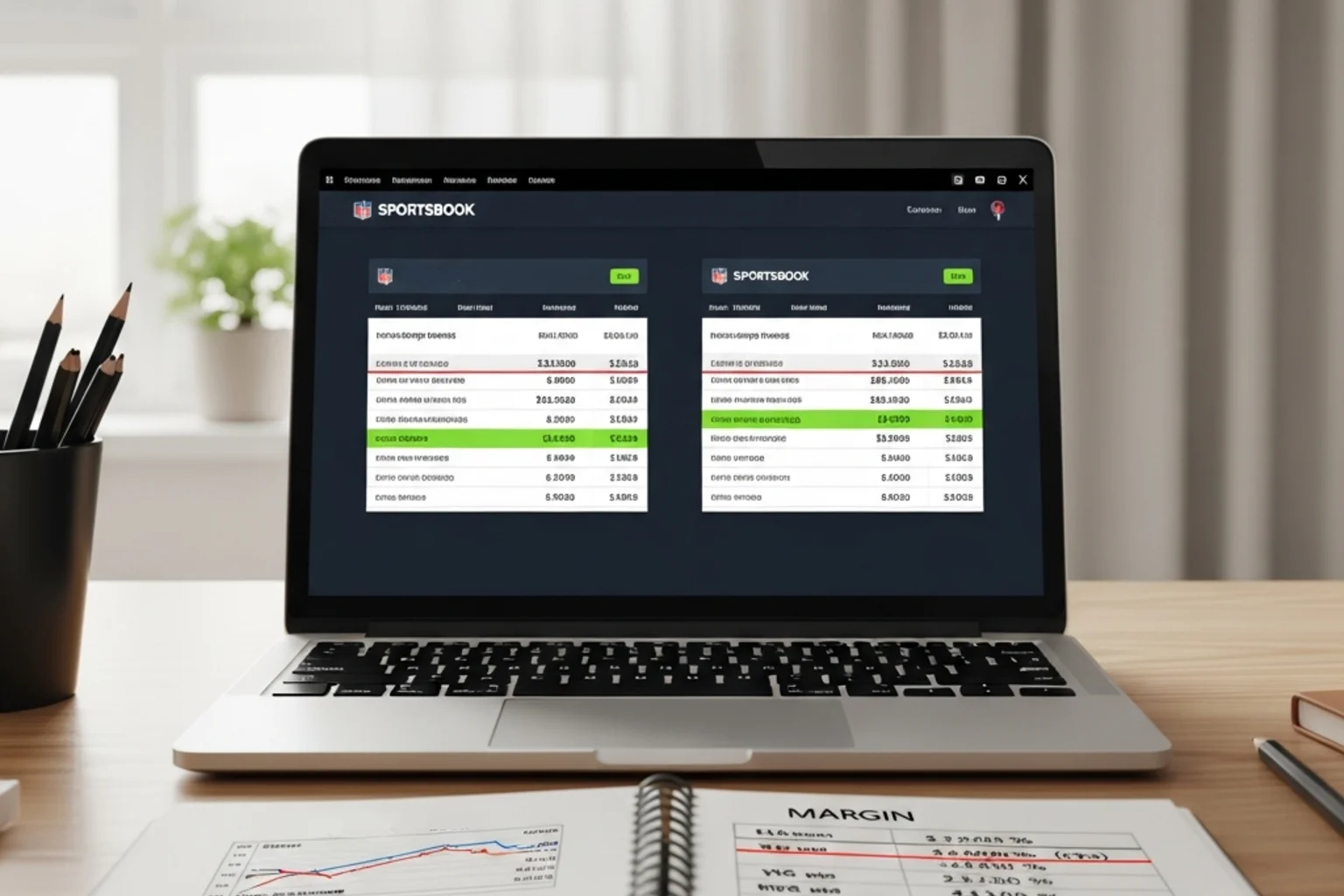
The tertiary edge is margin exploitation through line shopping. Consistently taking the best available price across three to five UK sportsbooks adds 1-3 percentage points to your effective ROI over a season. This is not an analytical edge — it is a mechanical one — but it is the single most reliable source of return improvement available to any UK prop bettor.
Account treatment and limits in the UK
The uncomfortable reality of profitable prop betting in the UK is that sportsbooks do not want your business. If you win consistently, your account will be restricted. The restriction might take the form of reduced maximum stakes, removal of promotional offers, or, in some cases, outright account closure. This is legal, widely practised, and one of the most significant structural barriers to long-term profitability.
UK sportsbooks are required by UKGC regulations to accept bets from all customers, but there is no requirement to accept bets at the prices displayed to the general public. A restricted account might see the same prop line as an unrestricted account but be limited to a maximum stake of 1 or 2 pounds, compared to the 500-pound maximum available to recreational bettors. The practical effect is that your ability to exploit the edges you have identified is capped at a level that may not justify the time invested in finding them.
I have been restricted at two UK sportsbooks over my prop betting career. The restrictions followed extended winning streaks — roughly 4-6 months of consistent profitability — and the process was sudden. One day my stakes were normal; the next day my maximum prop bet was 2 pounds. There was no warning, no explanation, and no appeal process. The experience is frustrating but predictable: the book’s commercial incentive is to retain losing customers and limit winning ones, and the regulatory framework permits this asymmetry. The total GGY of the UK’s remote gambling sector reached 6.9 billion pounds in the most recent reporting period, and a meaningful portion of that revenue depends on the ability to manage exposure to sharp bettors.
Realistic ROI ranges
Expectations matter. If you enter NFL prop betting expecting to double your bankroll each season, you will make increasingly reckless decisions as reality falls short of expectation. If you enter expecting a modest positive return with significant variance, you will make better decisions and be more likely to sustain the discipline required for long-term profitability.
A skilled, disciplined UK prop bettor with a genuine analytical edge can realistically target an ROI of 2-5% on their total prop handle over a full NFL season. On a 200-bet sample with an average stake of 10 pounds (total handle of 2,000 pounds), that translates to a profit of 40-100 pounds. This is not life-changing money. It is a supplement to the entertainment value of watching the NFL, earned through work that is intellectually satisfying but financially modest.
Professional prop bettors in the US — those who make a living from it — operate at higher volumes and with access to softer markets. Their ROI targets are similar (3-7%), but their handle is in the tens or hundreds of thousands of dollars. The UK market’s smaller scale, higher margins, and more aggressive account restrictions make it extremely difficult to replicate professional-level prop betting income in the UK. The honest assessment is that UK prop betting is a profitable hobby for a disciplined minority, not a viable income source.
The recreational punter’s case for props
If the financial case for prop betting is modest at best, why do it? Because the financial return is not the only return. Prop betting transforms the experience of watching an NFL game. When you have a passing yards over and a rushing yards under on the same fixture, every snap carries individual significance. The third-quarter drive that a casual viewer barely notices becomes a sequence of events that affects your positions. The engagement is deeper, the knowledge grows faster, and the connection to the sport intensifies in a way that moneyline or spread betting does not replicate.
Read our detailed review of Anytime Touchdown Scorer Bets: How the UK’s Favourite NFL Prop Actually Works.
For the recreational UK punter who is not trying to earn a living from props, the value proposition is entertainment per pound spent. A 10-pound prop bet on a Sunday night game provides three hours of heightened engagement. The expected cost — the margin the book charges — is 50 pence to 1 pound, depending on the market. Measured as entertainment expenditure, that is remarkably cheap. The key is understanding that you are paying for entertainment with a chance of profit, not investing with a guarantee of return.
The recreational approach requires its own discipline. Set a weekly budget, stick to it, and do not chase losses. Focus on props that increase your enjoyment of the games you are watching, not props on games you have no intention of following. Track your results even if you are not trying to be profitable, because the tracking prevents gradual escalation and keeps the activity within its intended entertainment boundaries.
For the information that underpins every profitability calculation — the injury data that drives late-breaking prop value — the injury news guide covers the single most impactful variable in NFL prop market efficiency.
Can a casual UK punter realistically beat NFL prop markets?
It is possible but unlikely. Beating the market requires consistent line shopping, disciplined bankroll management, and either a speed advantage in processing injury news or a model-based approach to projecting player outputs. Most casual punters lack the time or inclination for these activities, and the bookmaker’s margin means that undisciplined betting produces negative returns over any meaningful sample. A realistic goal for a casual punter is to minimise losses while maximising entertainment value.
How long is a fair sample to judge prop profitability?
A minimum of 300-500 prop bets is needed before your results are meaningfully distinguishable from random variance. At a rate of 10-15 prop bets per week during the NFL season, this translates to roughly two full seasons. Drawing conclusions from 50-100 bets is premature — winning and losing streaks of that length are well within the range of normal variance for a strategy with a genuine 3-5% edge.
Do winning prop punters get limited at UK books?
Yes. UK sportsbooks routinely restrict the maximum stake available to customers who demonstrate sustained profitability on prop markets. Restrictions can appear after 4-6 months of consistent winning and typically involve reduced stake limits rather than account closure. The practice is legal under UKGC regulations, and there is no effective appeal process. Maintaining accounts at multiple sportsbooks mitigates the impact but does not eliminate it.
Prepared by the Prop Bets for nfl editorial staff.